

Salem, Oregon
Homes for rent and for sale — search the map or open the full city SEO catch-all page.
Salem, Oregon
Moving to Salem Oregon means settling into a state capital of 181,779 people with a median gross rent of $1,400 and a cost of living roughly 6.9% above the national average. The economy is anchored by government, healthcare, and education jobs. Winters are long and grey from November through April, most daily trips require a car, and there is no general sales tax but a state income tax of 4.75% to 9.9%.
Moving to Salem Oregon
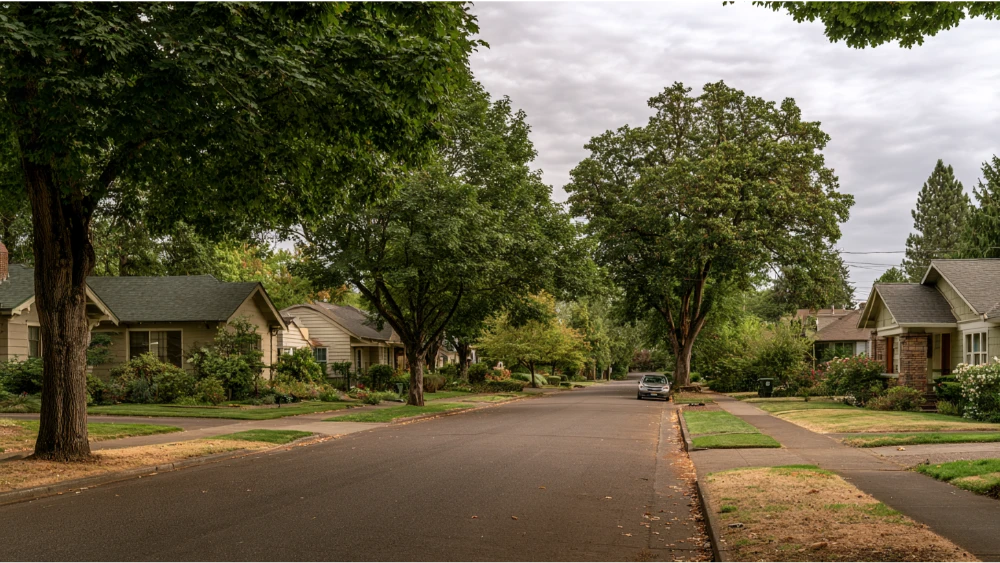
Moving to Salem Oregon means settling into a mid-sized Willamette Valley state capital with a job base anchored in government, healthcare, and education. The Census reports a median gross rent of $1,400 and a median household income of $75,487 (2020 to 2024 estimates), the city’s population was 181,779 as of July 2025, and Oregon has no general sales tax but does charge a progressive state income tax. Winters in this corner of the Pacific Northwest are mild and wet, summers are warm and dry, and daily life outside the walkable downtown area is mostly car-oriented.
This is an informational relocation guide written for renters and relocating households who want the real picture before they sign a lease, not another list of reasons the city is wonderful. We’ll cover what it costs, how people get around, where the jobs are, how to research schools and reported crime for a specific address, and what to set up after you arrive. KT Rents is a nationwide, broker-owned rental platform, and the tools we’ll point you to work no matter where your next lease lands.
Salem May Fit You If… (and Think Carefully If…)
Salem may fit you if you:
- Value government, healthcare, or education employment.
- Want city services plus easy access to parks, rivers, mountains, and the coast.
- Prefer a smaller city over a sprawling metro.
- Are comfortable renting first and learning the area before buying.
Think carefully if you:
- Want a big nightlife scene and late-night energy.
- Dread long grey, damp wet winters from November through April.
- Hope to avoid car dependence for most daily trips.
Where Is Salem and What Does Living in Salem Feel Like?
Salem is Oregon’s state capital, sitting in the Willamette Valley about 47 miles south of Portland, right in the heart of the Pacific Northwest and the western United States. Under normal driving conditions, you’re roughly an hour from the Oregon Coast and about an hour from Cascade Mountains recreation. That geography is a big part of the appeal: you can be on a river trail, at a vineyard, or headed toward the mountains without a major road trip, and the natural beauty around the valley is a daily backdrop rather than a weekend-only treat.
The city spans two counties. Most of Salem sits in Marion County, while West Salem lies across the Willamette River on the Polk County side. Living across Marion and Polk counties matters for taxes, services, and sometimes commute patterns, so it’s worth knowing which side of the river a property is on, and whether an address falls inside Salem’s city limits.
The feel of living in Salem is big city amenities wrapped in farm country, just at a more human scale. You get state government offices, a hospital, museums, and a historic downtown, surrounded by orchards, vineyards, and open valley. Most residents find it active without being frantic. One practical note: travel times shift with traffic and weather, so test your actual drive at commuting hours before you commit to a location.
What Does It Cost to Live in Salem, Oregon? (Compared to the National Average)
Cost of living in Salem runs roughly 6.9% above the national average, with housing as the main driver. Here are the key numbers to anchor your budget.
| Figure | What it means | Source / date |
|---|---|---|
| $1,400 | Median gross rent | Census, 2020 to 2024 estimate |
| $1,460 to $1,770 | Typical two-bedroom asking rent | Recent listing range |
| $416,900 | Median owner-occupied home value | Census, 2020 to 2024 estimate |
| $2,057 | Median monthly owner cost with a mortgage | Census, 2020 to 2024 estimate |
| $75,487 | Median household income | Census, 2020 to 2024 estimate |
Read the median gross rent figure carefully. The average rent reflects what current renters already pay across the whole city, not what a newly listed apartment asks today. Before you move, compare live listings in the Salem housing market by bedroom count and ZIP code so your budget matches reality.
No general sales tax is a genuine perk, but it doesn’t make Oregon tax-free. State income tax runs from 4.75% to 9.9% depending on income and filing status, and the effective property tax sits around 0.92%, which shows up in rent and in homeownership costs. To see how your income stretches here, run the numbers through our Cost of Living Calculator and Rent Calculator.
What Should Renters Check Before Signing a Lease in Salem?
A good lease answers a lot of small questions that turn into monthly bills. Before you sign, confirm:
- Which utilities are included in rent, and which you pay directly.
- Whether water is billed to you directly or allocated across units.
- Who provides electricity and garbage service. Salem uses six franchised haulers serving exclusive areas, so your provider depends on the exact address.
- What internet speeds are actually available at the property.
- Whether parking is included or costs extra.
- Pet restrictions, additional deposits, and any breed or weight limits.
- How maintenance requests are handled and how fast they’re answered.
Oregon also caps many residential rent increases. For 2026, the maximum allowable increase is 9.5% for many covered tenancies, with exemptions, notice rules, and property-age factors that change the math. Recheck the current cap before signing. This is exactly the kind of detail a full-service, broker-owned manager handles cleanly, from tenant screening to rent collection and maintenance, so you aren’t left guessing after move-in.
Should You Rent First or Buy After Moving to Salem?
If you’re relocating from out of state, renting first is usually the smart play. You get to learn the commute, feel out the weather, and test which part of town fits your routine before you tie up a down payment. The Census puts Salem’s owner-occupied rate at 55.9%, which means a large share of residents rent, so you won’t feel like the odd one out.
The ownership side is real too: a median home value of $416,900 and median monthly owner costs of $2,057 with a mortgage. Those are meaningful commitments, and the right choice depends on your finances, your timeline, and how long you plan to stay. We won’t pretend to give you personalized financial advice, but we’ll give you tools. Run your scenario through our Rent vs. Buy Calculator and Mortgage Calculator, then decide. Your Rental. Your Way.
How Do You Choose Among Salem’s Best Neighborhoods Without Relying on Rankings?
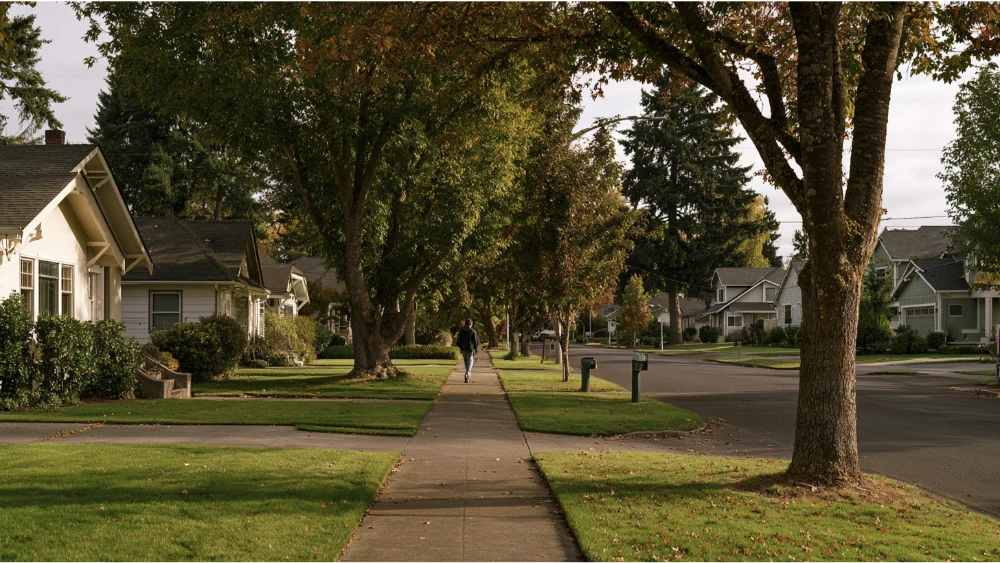
Skip the “best neighborhoods” lists. They’re subjective and they often lean on language that has no business in a housing decision. Use a neutral framework built on what actually affects your day instead.
A neighborhood decision checklist
- Distance to your work or school.
- Housing type and age that fits your needs.
- Bus access and how close you are to a route.
- Proximity to grocery stores and healthcare.
- Nearby parks and trails.
- Downtown walkability, if that matters to you.
- Whether your commute crosses the river or relies on a highway corridor.
- School attendance boundary for the exact address.
- Crime-map and floodplain checks for that specific property.
Salem has 17 officially recognized neighborhood associations, and the city’s neighborhood map is a good place to orient yourself. Describe areas by their characteristics, not labels. South Salem has established neighborhoods, quiet tree lined streets, and a mix of housing ages, and it spreads out below the downtown area toward the valley’s southern edge. West Salem, across the river on the Polk County side, includes newer construction and some valley views. If you’re hunting for affordable neighborhoods and affordable housing, compare several areas by the real numbers rather than reputation. Downtown Salem is the walkable center, with the historic district, the Capitol, state offices, Salem Hospital, Riverfront Park, shopping, and places to eat within easy reach. Pick by what your daily life needs, then verify everything for the exact unit, including whether it sits inside the city limits.
What Is the Job Market and Where Are the Job Opportunities in Salem?
Salem is a government town, but its economy is broader than state jobs alone. The State of Oregon is the largest employer and Salem Health is the largest private employer, and healthcare, education, and trade all carry real weight in the local job market. These figures describe the Salem metro area (Marion County and Polk County), not the city alone, and the federal government adds public-sector roles on top of the state ones.
As of August 2026 (preliminary data), the metro’s seasonally adjusted unemployment rate was 4.9%, with about 191,200 nonfarm jobs. The sector breakdown shows where the job opportunities concentrate:
- Government: 42,400 jobs
- Private education and health services: 38,700 jobs
- Trade, transportation, and utilities: 31,900 jobs
- Professional and business services: 17,800 jobs
- Leisure and hospitality: 16,600 jobs
Healthcare and education saw growth through 2025. If you’re moving without a job in hand, build a realistic search timeline and ideally line up work before you relocate. The public-sector and hospital base gives the local economy some steadiness, which many relocating households appreciate.
How Are the Schools in Salem-Keizer?
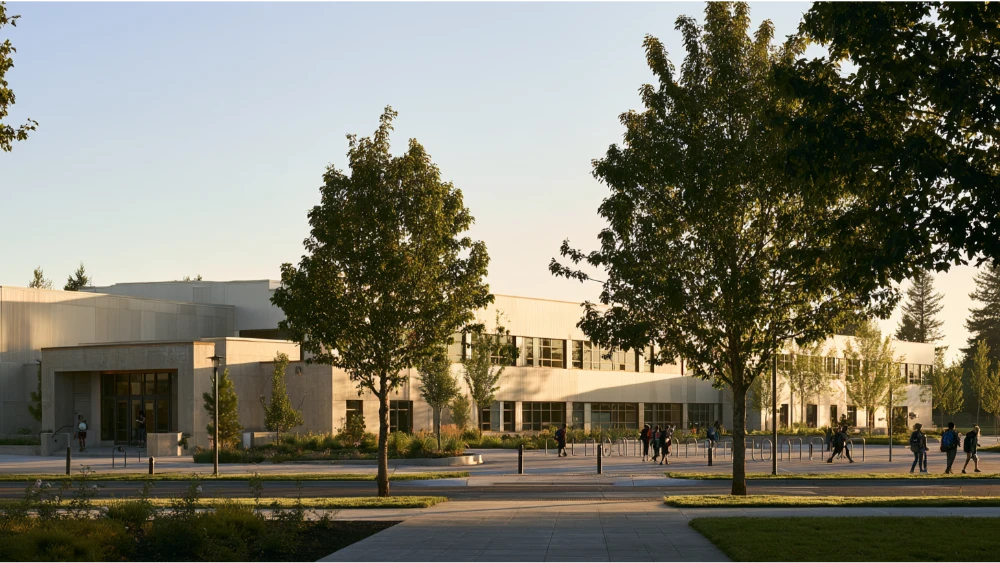
Salem Keizer Public Schools is Oregon’s second-largest district, running 65 schools with about 37,325 students in the 2025 to 2026 year. Program variety is a strength: dual language programs, career and technical programs, charter and option schools, early college, online learning, athletics, music, theater, and special education are all part of the mix.
School assignment is address-based, so a listing description or a neighborhood article won’t tell you which school a home actually feeds into. Use the Salem Keizer School District’s current attendance-area tool for the exact property. The district also publishes an overall rating (recently a B-), which you can note as one published data point among several, alongside the state average when you compare.
Higher education rounds things out. Willamette University sits in the downtown area next to the Capitol, giving Salem a classic college-town thread, and the Chemeketa community-college campus offers transfer tracks, workforce development, technical programs, and community classes, plus a planetarium and arts programming. Between Willamette University and Chemeketa, families and adult learners alike have plenty of options to check.
Healthcare and Hospitals: What Salem Offers
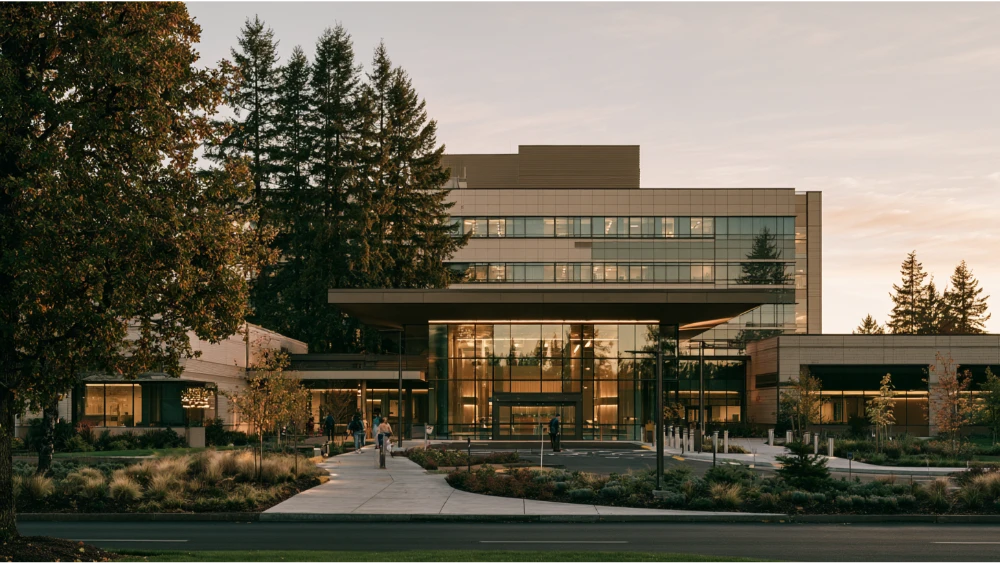
Salem Hospital is a nonprofit facility licensed for 644 acute-care beds, and it carries serious volume. In 2024 it logged 115,479 emergency-department visits, 16,167 surgeries, and 3,024 births. Salem Health Hospitals & Clinics employs more than 6,400 people, making it both a major care provider and a major employer.
Capacity is one thing; access is another. Before you move, verify that your insurance network includes the doctors, specialists, and pharmacies you’ll want to use here. That one step saves more headaches than any hospital list. And know the difference between urgent care and the emergency department so you choose the right option, and the right cost, when something comes up.
Getting Around Salem: Do You Need a Car?
For most people, yes. Most residents drive for daily errands. The mean commute is a manageable 22 minutes, and Salem has a real transit system, but there’s no urban light rail, and outside the walkable downtown core daily life leans on a car. Cherriots runs local and regional bus service connecting Salem and Keizer with surrounding Mid-Willamette Valley communities, including the Keizer Station retail area, and the network is broader than the outdated “only a few routes” claim you’ll still find in some older guides.
Current Cherriots fares are $1.60 for one ride, $3.25 for a day pass, and $45 for a 30-day pass. Riders ages 0 to 18 travel free, though riders 14 to 18 need the designated youth pass. Fares and routes change, so confirm them before you rely on them. Because most residents drive and transit coverage varies, housing location relative to work, school, shopping, and a bus line makes a big difference. Test your actual home-to-work route on a weekday at the hour you’ll drive it.
What Is Salem’s Weather Like Through the Year?
Salem’s climate is classic Pacific Northwest and Willamette Valley: mild damp winters and warm dry summers. NOAA’s 1991 to 2020 normals put January highs and lows at 48.4°F and 35.8°F, and July at 83.5°F and 55.1°F. Annual precipitation runs about 40 inches spread across roughly 148 wet days, with about 154 sunny days over the year.
The honest part: expect a long grey, drizzly stretch of wet winters from November through April. It rarely pours nonstop, but the overcast persistence is real, and it’s the single thing newcomers underestimate most. Summers are the payoff, warm and low in humidity. Pack good rain gear, and ask whether a rental has air conditioning for the hotter stretches. Wildfire smoke is a regional possibility some summers, not a constant, so consider air filtration. Oregon also carries earthquake hazard, which is worth planning for even though quakes are infrequent.
Fun Things to Do in Downtown Salem: Food, Culture, and Live Music
Salem’s cultural scene punches above its size, especially for a capital city rooted in farm country. Downtown Salem is the heart of it, with local dining, strong coffee, and the historic Elsinore Theatre hosting live music and stage performances. The Mouth Neighborhood Bistro is one of the local spots that gives the food scene its personality. Art lovers get the Hallie Ford Museum of Art, one of Oregon’s largest, and the Grand Theatre sometimes screens foreign films for a change of pace. Families can spend an afternoon at the Gilbert House Children’s Museum. The Oregon State Capitol anchors the civic side, with grounds, tours, and the rhythm of a working government town.
Seasonal community events give the calendar its texture. The Salem Saturday Market brings local produce and makers downtown, the Salem Art Fair draws regional artists, and the World Beat Festival celebrates cultures from more than 70 nations. Every August the Oregon State Fair rolls in, a tradition running since 1862. Surrounding all of it is Willamette Valley wine country, with vineyards, orchards, farmers markets, ciders, and microbrews within easy reach. Think active capital-city energy with deep agricultural roots, more day-and-evening life than late-night club scene.
Parks, Natural Beauty, and Outdoor Recreation: From Minto Brown Island Park to Bush’s Pasture Park

Outdoor recreation is one of Salem’s strongest selling points, and the natural beauty is close enough to enjoy on an ordinary weekday. The city maintains more than 90 parks and plenty of outdoor space, headlined by Minto Brown Island Park, which covers over 1,200 acres with 29 miles of trails arranged in nine loops. It includes a 30-acre off-leash dog area and connects to Riverfront Park and Wallace Marine Park via pedestrian and bicycle bridges. The linked riverfront system and Willamette River Greenway give residents more than 20 miles of walking, running, and biking routes tying the downtown area to the river.
Bush’s Pasture Park adds gardens, heritage cherry trees, and open space closer to the center of town, and the Willamette River opens up paddling and other water activities in the warm months. Dog owners have real room to roam, and families get easy everyday nature without driving far. South Salem sits within quick reach of several of these green spaces, often within walking distance of a trailhead, which is part of why its established neighborhoods stay popular.
For bigger adventures, day trips are close. Silver Falls State Park and its 7.2-mile Trail of Ten Falls is a regional favorite, the beach town of Lincoln City makes an easy coastal run, and the Cascade Mountains and Oregon Coast are each about an hour away under normal conditions. That kind of state park access paired with valley trails near the Willamette River makes outdoor recreation a genuine, year-round draw. Weekends here reward people who like to get outside.
History and Heritage: Pioneer Life in Salem
Salem wears its history openly. The Willamette Heritage Center preserves pioneer life and early industry on a five-acre campus of historic buildings, including one of the oldest frame houses in the Pacific Northwest and a restored woolen mill. The grounds also anchor the Heritage School programming for younger students, and seasonal community events bring the old mill grounds to life. For anyone curious about how the valley grew from farm country into a capital, these sites are an easy afternoon.
Safety, Property Crime, and Earthquake Preparedness in Salem
Research safety at the address level, not by neighborhood reputation. Salem Police publishes a near-real-time Community Crime Map that lets you filter by event type, time period, and area, showing incidents by hundred block. The department’s “Crime in Salem” report covers broader trends. Together they let you check the reported property crime rate and violent crime near a specific rental, which beats any blanket label about a part of town. If a listing sits near the city limits or straddles a boundary, pull the map for that exact block rather than trusting a general impression.
The city identifies flooding as Salem’s primary natural hazard, so check the city floodplain map before signing a lease or buying. Earthquakes are the other big planning item. Local and state guidance recommends households be ready to stay self-sufficient for two weeks after a major emergency, storing at least one gallon of water per person per day (about 56 gallons for a household of four over 14 days). Register for Marion Polk Alerts to get notifications about floods, evacuations, and other urgent events. Property-specific checks give you real answers, and they keep the conversation about facts rather than stereotypes.
Your Out-of-State Moving Checklist for Salem
Before you sign:
- Verify rent and which utilities are included.
- Check your commute at peak hours.
- Confirm the Salem Keizer School District attendance boundary for the address.
- Review the crime map and the floodplain map.
- Check internet and mobile coverage at the property.
- Confirm parking and pet policies.
- Verify your healthcare network includes local providers.
After you arrive:
- Start city water, wastewater, and electricity service.
- Identify your franchised garbage and recycling hauler by address.
- Get your Oregon driver’s license and register your vehicle within 30 days.
- Register to vote at least 21 days before an election.
- Sign up for Marion Polk Alerts.
- Learn your transit options and waste collection schedule.
One more thing for flights: since May 7, 2025, travelers 18 and older need a REAL ID-compliant document or another federally accepted ID for domestic flights. Salem is a diverse community, with 23.5% of residents five and older speaking a language other than English at home, so bilingual resources genuinely help here. Se Habla Español.
Who Is Salem, Oregon Likely to Fit?
Salem tends to suit people drawn to government or healthcare work, since those sectors anchor the economy. It fits remote workers who want city services paired with quick outdoor recreation, and renters who prefer a smaller city over a sprawling metro. It works best for people who are comfortable with wet Pacific Northwest winters and who don’t mind driving for most daily errands. If those priorities line up with yours, Salem Oregon is worth a serious look.
Frequently Asked Questions
Is Salem, Oregon a good place to live?
For many people, yes. Living in Salem gives you a steady public-sector and healthcare job base, strong outdoor access, and no general sales tax. The main trade-offs are a long grey, wet winter and a mostly car-dependent lifestyle outside downtown.
How much do you need to make to live comfortably in Salem, Oregon?
Cost of living runs about 6.9% above the national average, median household income is in the $75,000 to $80,000 range, and two-bedroom rent commonly falls between $1,460 and $1,770. There’s no single magic number, so run your own figures through our Cost of Living Calculator.
What is the downfall of living in Oregon?
The honest drawbacks are a state income tax (4.75% to 9.9%) that isn’t offset by a sales tax, a long damp grey season, earthquake and occasional wildfire-smoke considerations, and real car dependence for daily life.
Is Salem within commuting distance of Portland?
Salem is 47 miles south of Portland, about an hour under normal conditions, and Portland International Airport is reachable for travel. Test the drive at rush hour before you count on it, since traffic and weather can stretch it considerably.
Ready to Find Your Rental? Start Here
Here’s a simple sequence to move from browsing to signing with confidence:
- Run the Cost of Living Calculator to see how your income fits.
- Compare renting and buying with the Rent vs. Buy Calculator.
- Browse available rentals that match your budget and commute.
- Submit a rental application or contact the property representative.
KT Rents is a full-service, broker-owned rental platform that’s been operating nationwide since 2009. We’re a national resource built to help you research and rent smart wherever you’re headed, whether that’s Salem Oregon or anywhere else in the Pacific Northwest. Your Rental. Your Way. Reach us at (800) 716-4950, text (608) 207-0657, or email info@ktrents.com, and we’ll respond within 24 hours. Se Habla Español.